10 DIY Christmas Stockings You Can Sew This Weekend
Save to Pinterest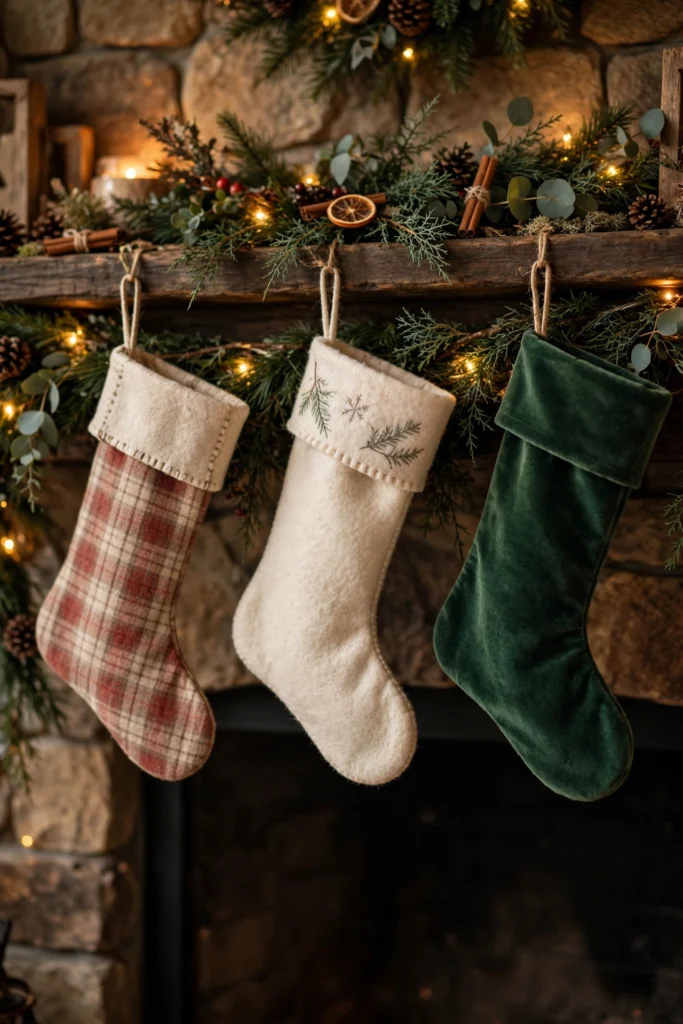
A stocking you made yourself beats a store-bought one every time. It carries your fabric choices, your stitches, and maybe a name embroidered in your own handwriting. The good news is that most stockings are a genuinely beginner-friendly project: two shaped pieces, a seam, a cuff, and a loop for hanging. Pick a style below, gather your fabric, and you could have a whole mantel full by Sunday evening.
1. Classic Cuffed Stocking
This is the timeless shape everyone pictures at Christmas: a simple stocking body with a folded-down cuff at the top. Choose a cheerful print for the body and a contrasting solid or plaid for the cuff, and add a small hanging loop so it sits neatly on the mantel.
2. Cozy Felt Stocking
Felt is wonderfully forgiving because it doesn’t fray, so there are no hems to finish. Cut two stocking shapes, stitch them together with a simple running stitch, and decorate with felt shapes like trees, stars, or snowflakes glued or stitched on top.
3. Plaid Flannel Stocking
Soft flannel in a classic plaid gives a cabin-warm feel that suits rustic and traditional homes alike. Add a faux-fur or fleece cuff for extra coziness, and keep the stitching simple so the fabric pattern does the talking.
4. Patchwork Scrap Stocking
If you have a bin of fabric scraps, this is the project for them. Sew small squares or strips together into a patchwork panel, cut your stocking shape from it, and back it with a plain fabric. Every stocking turns out completely one of a kind.
5. Burlap and Lace Stocking
For a farmhouse look, pair natural burlap with a band of lace or a simple ribbon trim. Line it with a smooth cotton so small gifts don’t snag, and add a sprig of greenery or a wooden tag for a finished touch.
6. Velvet Stocking with a Monogram
A rich velvet stocking looks instantly elegant on the mantel. Keep the body plain, then add a single embroidered or appliquéd initial on the cuff — it personalizes the stocking and makes it easy to tell everyone’s apart on Christmas morning.
7. Kids’ Handprint Stocking
Let children press a painted handprint onto plain fabric, then cut the stocking shape around it and add their name and the year. It’s a sweet keepsake that captures how little their hands once were, and it gets more precious every year.
8. Sweater Upcycle Stocking
An old chunky knit sweater makes a wonderfully soft stocking with almost no extra work. Cut the stocking shape so the sweater’s ribbed hem becomes the cuff, stitch the sides, and you have a cozy stocking with instant vintage charm.
9. Quilted Stocking
For a sturdier, heirloom feel, layer your outer fabric with batting and a lining, then quilt simple diagonal lines across the panel before cutting the stocking shape. The padding gives the stocking a lovely shape and helps it hold its form when filled.
10. No-Sew Fleece Stocking
Short on time or sewing confidence? Fleece doesn’t fray, so you can cut two shapes, glue or fringe-knot the edges together, and add a ribbon loop. It’s a great first project for kids and a quick way to make stockings for the whole household.
Closing Tips
Always cut two mirror-image pieces — one for the front and one for the back — and test the size against the gifts you plan to tuck inside before you stitch. A lining makes any stocking look more polished and last longer, and a sturdy loop is worth the extra minute it takes. If you’re making several, cut them all at once assembly-line style, then sew them one after another.
FAQ
Do I need a sewing machine to make a Christmas stocking?
No. A machine is faster, but felt, fleece, and simple cotton stockings can all be hand-stitched with a basic running stitch.
What fabric is best for a beginner stocking?
Cotton and felt are the easiest to work with because they hold their shape and don’t slip around while you sew.
How do I add a name to a stocking?
Iron-on letters, simple embroidery, fabric paint, or an appliquéd initial on the cuff all work well — pick whichever method matches your comfort level.
Should I line a DIY stocking?
A lining isn’t essential, but it hides raw seams, protects delicate outer fabrics, and helps the stocking keep its shape when full.